


Open Floor Plan Kitchen Design: Creating a Functional Space
The open plan kitchen has become the heart of modern home design, transforming the way we cook, entertain, and live. The process of removing walls that traditionally separated the kitchen from living and dining areas enables homeowners to create expansive, light-filled spaces that encourage interaction and connection. However, achieving functionality in an open kitchen requires thoughtful planning – in this blog, we’ll provide some expert tips for designing the perfect open plan kitchen.
Creating Zones
Creating zones within your open kitchen is essential for maintaining functionality but you don’t need to have it divided equally between living and cooking areas. The kitchen work triangle, connecting the refrigerator, sink, and stove, should remain the foundation of your design, but from there, think outside the box and create a layout that’s dictated by use and your lifestyle rather than neat division lines, such as breaking up the space with a large dining table or a comfy sofa and plush rugs.
Smart Storage Solutions
Storage is even more essential in open floor plan kitchens since everything is on display. Incorporate a mix of closed and open storage to maintain visual appeal while ensuring adequate space for kitchen essentials, such as deep drawers which work better than traditional cabinets for storing pots, pans, and appliances, and pull-out organisers to maximise the accessibility of corner cabinets. A walk-in pantry or strategically placed cabinet can help to hide bulk items and keep countertops clutter-free.
Lighting Design for Open Spaces
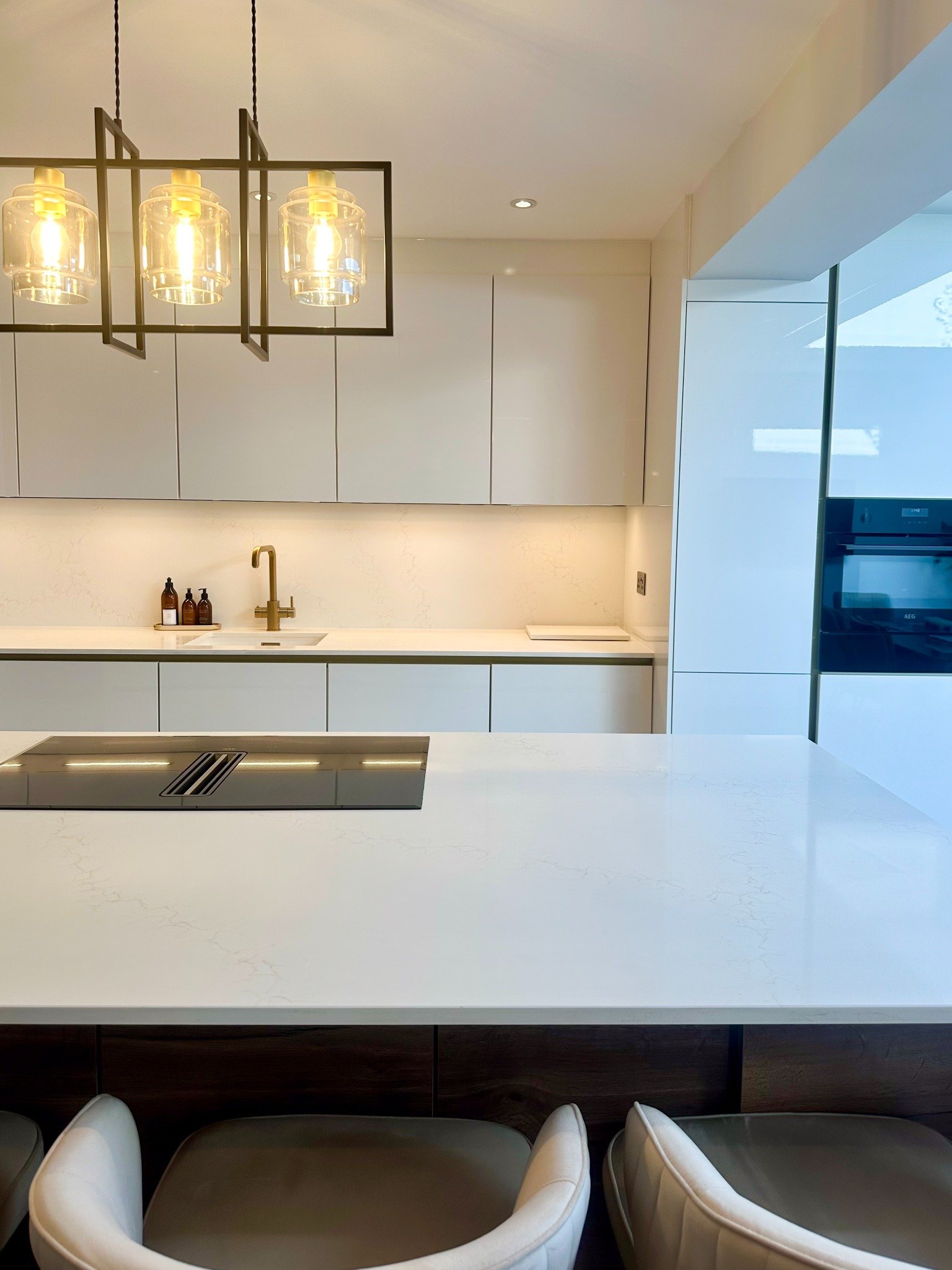
Lighting requires special attention in open plan kitchens to properly illuminate work areas while creating the right atmosphere for the living spaces, where you’re likely to want more ambient, cosy light. The trick is to layer your lighting, with task lighting under cabinets and over islands, ambient lighting through recessed fixtures or chandeliers, and accent lighting to highlight architectural features or decorative elements. Pendant lights over an island or dining table can help to create visual separation between zones too.
Go handleless
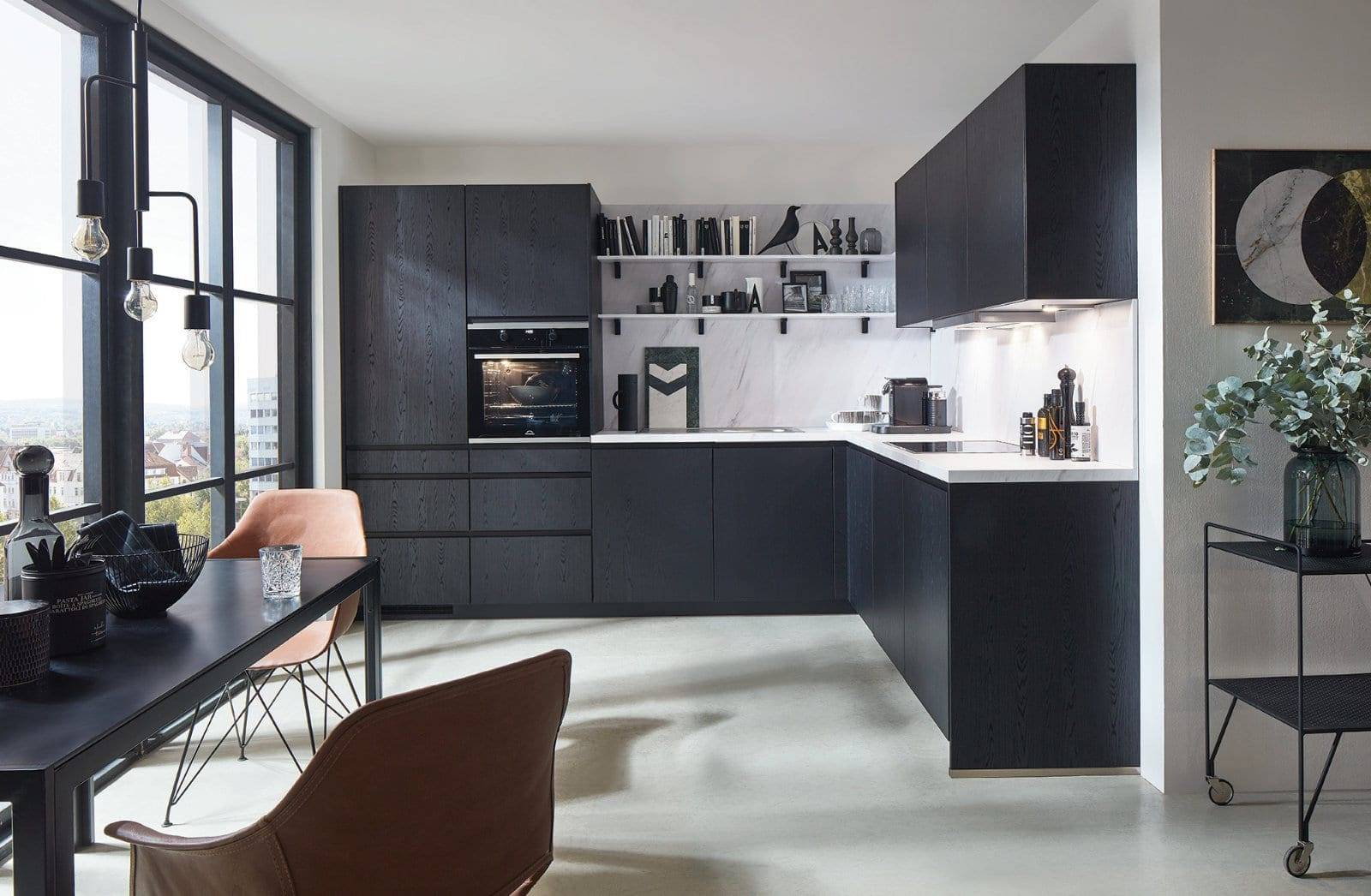
Handleless kitchens are perfect for open plan designs because they pair perfectly with the modern style and keep those clean lines that are so important in a space where everything is on show. Choose a matte sheen to your cabinets in white, grey or even black to minimise visual distractions and reflections, and adds that all-important luxury edge to your kitchen.
Managing Noise and Odours
Managing noise and odours is a unique challenge in open kitchen designs, but it can be handled with a high-quality range hood that will effectively remove cooking odours and grease before it spreads throughout the connected spaces. When choosing the model, check the hood’s sound rating, as excessive noise can disrupt conversations and entertainment in surrounding areas. Clever placement of soft furnishings like area rugs, upholstered seating, and curtains in the connected living spaces can help absorb sound and reduce echo in the large, open area.
Integrating Technology
Technology can significantly enhance the functionality of your open kitchen. Smart appliances, for example, that operate quietly and efficiently support the social nature of open floor plans, while integrated charging stations and hidden cable management keep the space looking clean and organised. Another option is to install speakers in the ceiling for ambient music that enhances the entertaining atmosphere while keeping the design clean and uncluttered.
Achieving Visual Cohesion
You want your kitchen-living area to flow, so you need to pay close attention to textures and colour to blend each space together. Choose a consistent flooring material that flows throughout the open area, or use complementary materials that create smooth transitions between zones. Your kitchen’s colour palette should harmonise with the overall living space while allowing for some variation to define each space – you might use the same or similar paint colours, but vary the intensity, for example, or add accent colours through backsplashes, window treatments, or decorative accessories.
Creating Your Perfect Open Kitchen
By carefully planning zones, optimising storage where possible, and maintaining visual cohesion throughout the connected spaces, you can create a kitchen that continues to serve as the functional and social heart of your home.
Why not book an appointment to start designing your perfect kitchen?